About the Product
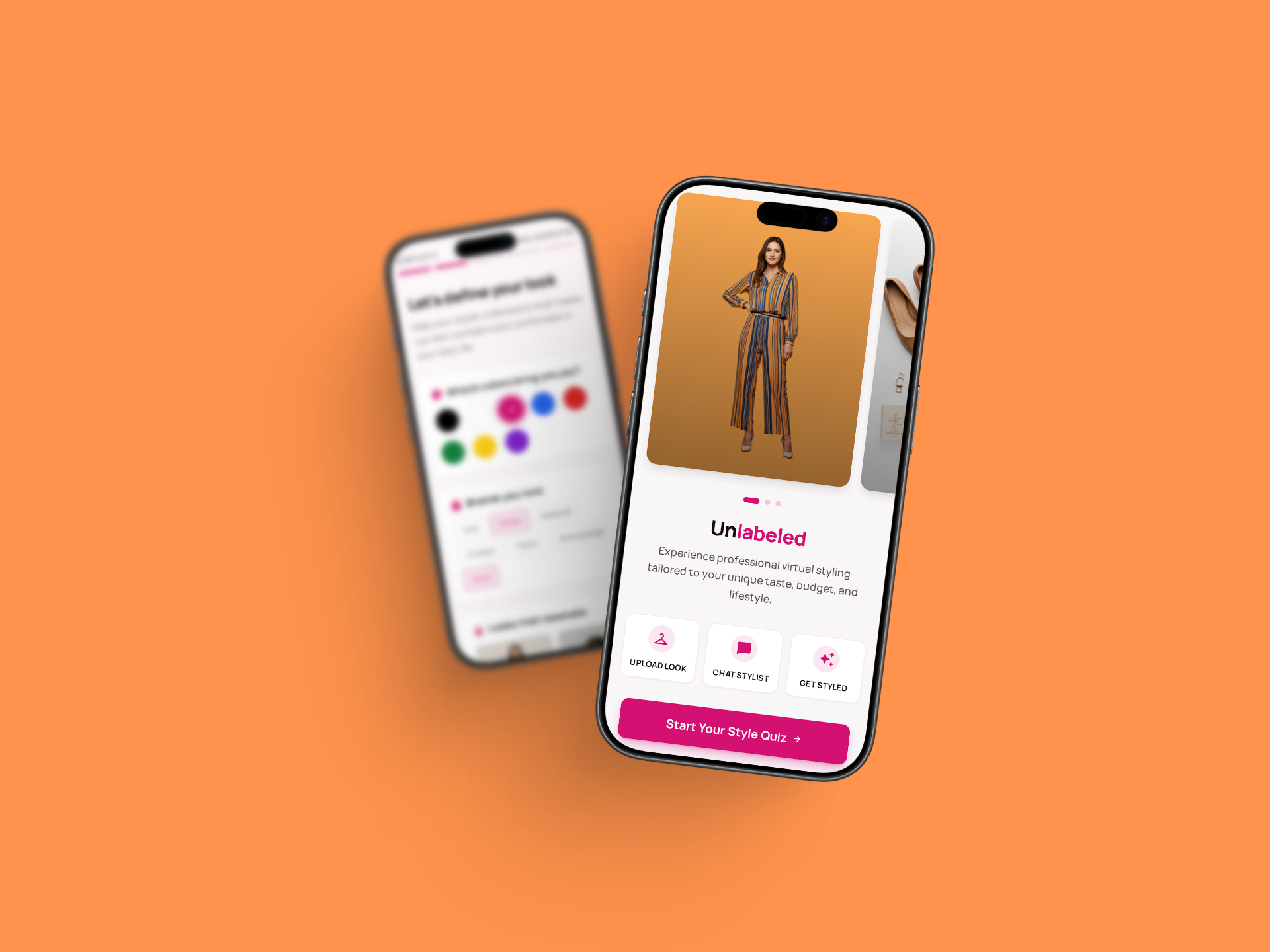
Unlabeled is a premium, concierge-style fashion app that transitions the expertise of high-end boutique styling into a digital format. It is not a typical e-commerce store; it is a service-first platform where professional stylists curate bespoke wardrobes based on a deep understanding of a client’s lifestyle, body type, and aesthetic preferences.
Stylist-first, not product-first
The app leads with the stylist relationship, not a catalogue. Clothing is the output of a conversation, not the entry point.
Designed for women 30–65
Type size, contrast, and interaction targets all optimised for a demographic that luxury apps routinely underserve.
Problem Statement
"With the sudden closure of physical storefronts, Unlabeled faces the risk of losing its loyal client base. The challenge is to replicate a high-touch, intimate, and consultative in-store experience within a mobile interface."
The Core Conflict
How do we ask 20+ detailed style and sizing questions without causing "survey fatigue," while maintaining a sense of luxury and personal trust for women aged 30–65?
My Role & Process
Research
Conducting stakeholder interviews and defining user personas to understand the luxury consumer.
UX Strategy
Mapping how the in-store discovery conversation — the back-and-forth between stylist and client — could be replicated as a mobile flow without feeling like a form.
UI Design
Creating an accessible, high-end visual language tailored for a mature demographic.
Prototyping
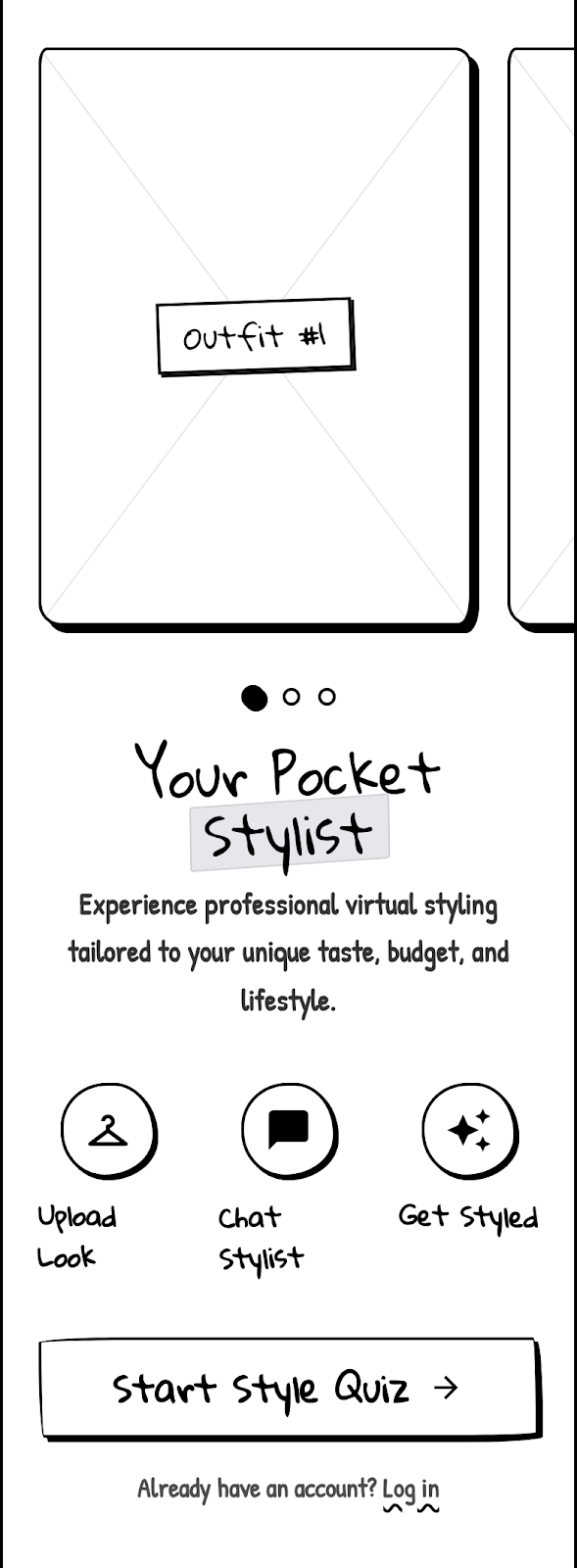
Developing a high-fidelity flow for the style questionnaire and selection process.
The Philosophy:
Process as Product
Stakeholder Insights
To truly understand the "soul" of the brand before moving into wireframes, I conducted an in-depth interview with Yann Weinstein, the CEO. My goal was to move beyond the technical requirements and uncover the emotional core of the business. Yann’s insights shifted the project from a simple "form-building" exercise to a high-stakes digital transformation.
"The clothing is simply the outcome; the real product is the styling expertise. Every digital interaction needs to feel like a conversation with a stylist rather than a data entry task."
— Yann Weinstein, CEO
Yann was adamant that Unlabeled is not a typical e-commerce store. He emphasized that the transition to digital must not feel like a cold, automated algorithm. For the brand to succeed online, the app must replicate the warmth and intimacy of a physical boutique.